How to Use a Banneton: Step-by-Step for Sourdough
How to use a banneton proofing basket for sourdough: flouring, shaping, proving times, cold proofing and turning the dough out cleanly. A practical UK guide.
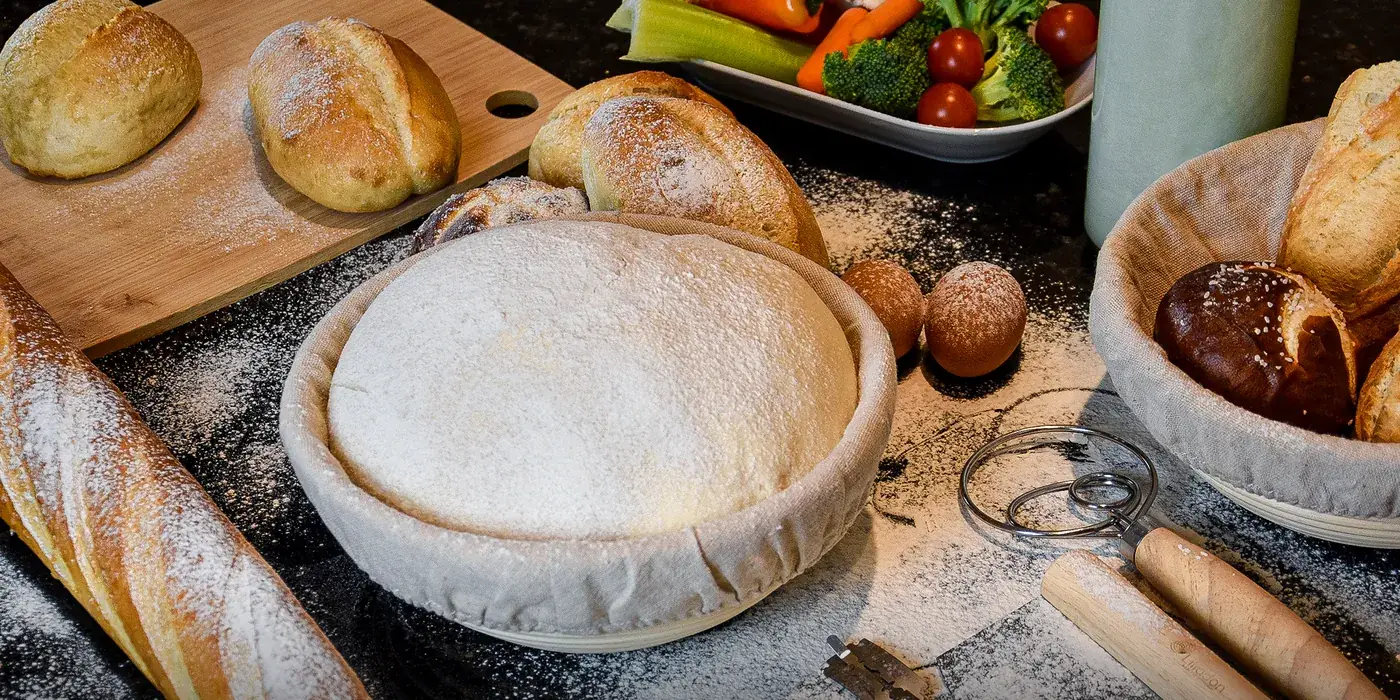
A banneton does one job brilliantly: it holds your shaped dough during the final rise so the loaf keeps its height instead of slumping. Use it well and you'll get taller bread, a crisper crust and that bakery-style spiral of flour. Here's exactly how.
What you need
- A banneton (round for a boule, oval for a batard)
- Rice flour, or a 50/50 mix of rice flour and plain flour, for dusting
- Your dough, about 700 to 900 g for a 25 cm basket
- Something to cover the basket: a shower cap, a clean plastic bag or a damp tea towel
- Baking parchment and a Dutch oven, baking stone or tray
- A lame or very sharp knife for scoring
1. Prepare the basket
If the basket is brand new, season it first. It takes two minutes and is the single best way to stop sticking.
Before each bake, decide whether to use the cloth liner:
- With the liner: smoother crust, easier clean-up and more forgiving with wet, high-hydration dough.
- Without the liner: the classic spiral rings on the crust. Best with a well-seasoned basket and a dough you're confident with.
Either way, dust generously with rice flour and tap out the excess. You want an even, thin coat in every groove.
2. Shape the dough and place it seam side up
After the bulk ferment, pre-shape your dough into a loose round and rest it for 20 to 30 minutes. Then do the final shape, building surface tension so the top is tight and smooth.
Lift the dough and lower it into the basket upside down: smooth side down, seam side up. The bottom of the basket becomes the top of your loaf. If the seam has opened, pinch it closed and sprinkle a little more flour over it.
3. Prove
Cover the basket so the surface doesn't dry and form a skin. Then choose your timing:
| Method | Typical time | Best for |
|---|---|---|
| Room temperature (around 20 to 22°C) | 1 to 3 hours | Yeasted doughs and same-day sourdough |
| Fridge (cold proof, 3 to 5°C) | 8 to 16 hours | Sourdough flavour, easier scoring, flexible timing |
Times vary a lot with dough temperature, starter strength and flour, so learn to read the dough rather than the clock. For the overnight method, see cold proofing sourdough in a banneton.
4. How to tell it's ready: the poke test
Lightly flour a fingertip and press about 1 cm into the dough.
- Springs back straight away: under-proved. Give it more time.
- Springs back slowly and leaves a small dent: ready to bake.
- Doesn't spring back at all: over-proved. Bake it now. It may spread a little, but it will still taste good.
Cold dough springs back more slowly, so the poke test is less reliable straight from the fridge. Look for a domed, slightly puffy surface instead.
5. Turn out, score and bake
- Preheat your oven (and Dutch oven, if using) well in advance, typically 230 to 250°C.
- Place parchment over the basket, put a board or peel on top, and flip everything over in one confident move.
- Lift the basket away. If you used the liner, peel it back gently.
- Brush off excess flour if you like, then score with a lame: one long cut for a batard, a cross or square for a boule.
- Bake. The basket stays out of the oven. Bannettes are for proving only.
Once you're done, brush out the basket and leave it to dry fully. Our cleaning and care guide covers the rest.
Frequently asked questions
Do you flour a banneton every time?
Yes. Dust the basket or liner before every use. A seasoned basket needs less, but a light coat of rice flour each time is what stops sticking.
Why does my dough stick to the banneton?
Usually not enough flour, wheat flour turning gummy, or a very wet dough without the liner. Switch to rice flour, use the liner for wet doughs and make sure the basket is fully dry before use.
Can I bake bread in a banneton?
No. A banneton is only for proving. Turn the dough out onto parchment or into a Dutch oven before baking.