Cold Proofing Sourdough Overnight in a Banneton
How to cold proof (retard) sourdough overnight in a banneton in the fridge: timings, covering, how to tell it is ready and baking straight from cold.
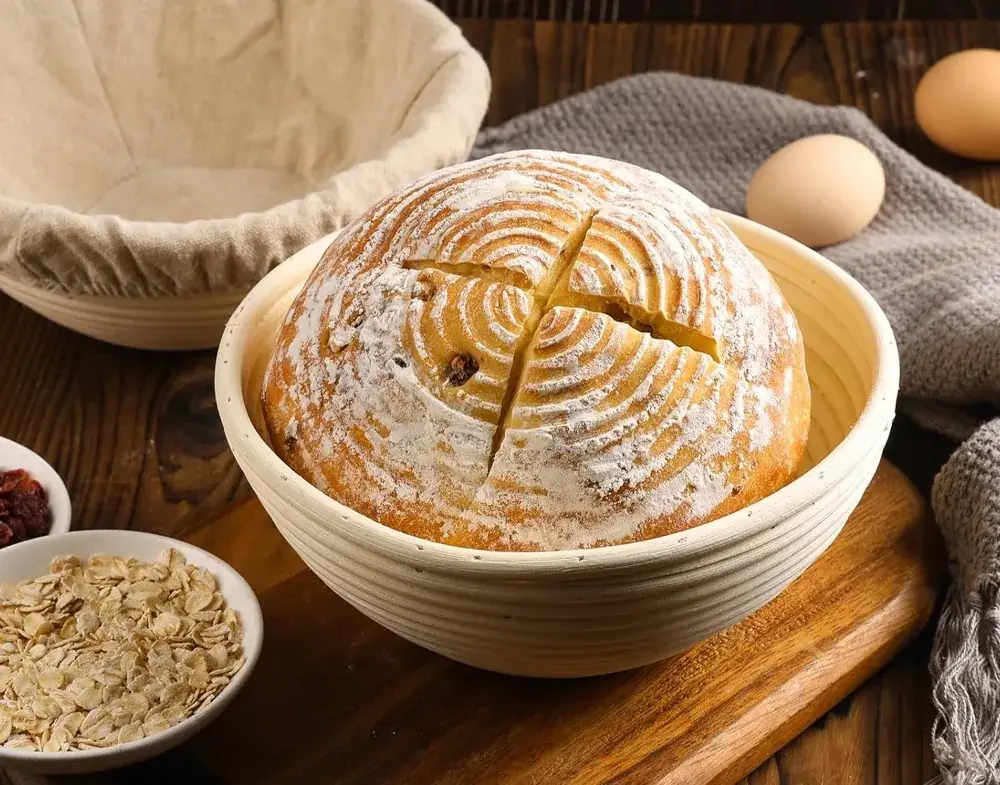
Cold proofing (also called retarding) means letting your shaped dough do its final rise slowly in the fridge, usually overnight. It's how most bakeries make sourdough, and a banneton is the perfect tool for it.
Why cold proof?
- Better flavour. A long, cool rise gives a deeper, tangier sourdough taste.
- Easier scoring. Cold dough is firmer, so your cuts are cleaner and the loaf opens up better.
- Flexible timing. Shape in the evening and bake the next morning or even that afternoon.
- Two loaves, two days. With a pair of bannetons, bake one loaf in the morning and leave the second in the fridge to bake later.
How to cold proof in a banneton
- Flour your basket well with rice flour. Cold proofing is long, so sticking is more likely if you skimp.
- Shape your dough and place it seam side up in the basket.
- Cover it. A shower cap, a reusable bag or a large freezer bag works well. This stops the dough drying out and absorbing fridge smells.
- Optionally leave it at room temperature for 30 to 60 minutes to get it started, especially if your starter is sluggish.
- Put it in the fridge, ideally at 3 to 5°C.
How long in the fridge?
Most sourdough is happy with 8 to 16 hours. Many recipes stretch to 24 hours or more, but the longer you go, the sourer the loaf gets and the more the dough relaxes. If your bulk ferment ran long or your kitchen was warm, aim for the shorter end.
When it's ready, the dough will look domed and puffy, and feel slightly airy when pressed gently.
Baking straight from the fridge
There's no need to warm the dough up. In fact, baking straight from cold is easier: preheat your oven and Dutch oven, turn the dough out onto parchment, score it immediately and bake. The firm, cold dough holds its shape and scores beautifully.
A sample schedule
| Time | Step |
|---|---|
| Morning | Feed your starter |
| Early afternoon | Mix the dough |
| Afternoon | Bulk ferment with stretch and folds |
| Evening (around 8pm) | Shape, place in bannetons, cover and refrigerate |
| Next morning | Preheat, turn out, score and bake loaf one |
| Next evening | Bake loaf two |
Frequently asked questions
Do I need to cover the banneton in the fridge?
Yes. Uncovered dough forms a dry skin, which limits the rise and makes scoring harder. A shower cap or bag over the basket is ideal.
Can I leave sourdough in the fridge for 48 hours?
Some bakers do, but the flavour becomes very sour and the dough can overproof and slacken. For most home bakers, 8 to 24 hours gives the best results.
Should I let the dough come to room temperature before baking?
No. Bake it straight from the fridge. Cold dough is easier to score and holds its shape better.